city of london
Clients: Angelo Gordon/Beltane Asset Management and architects Piercy and Co
Role: RIBA stages 2 – 4
Site area: 2,527sqm
Image credit: reproduced with the permission of Beltane Asset Management
One of the largest roof terraces in London in a landmark location.
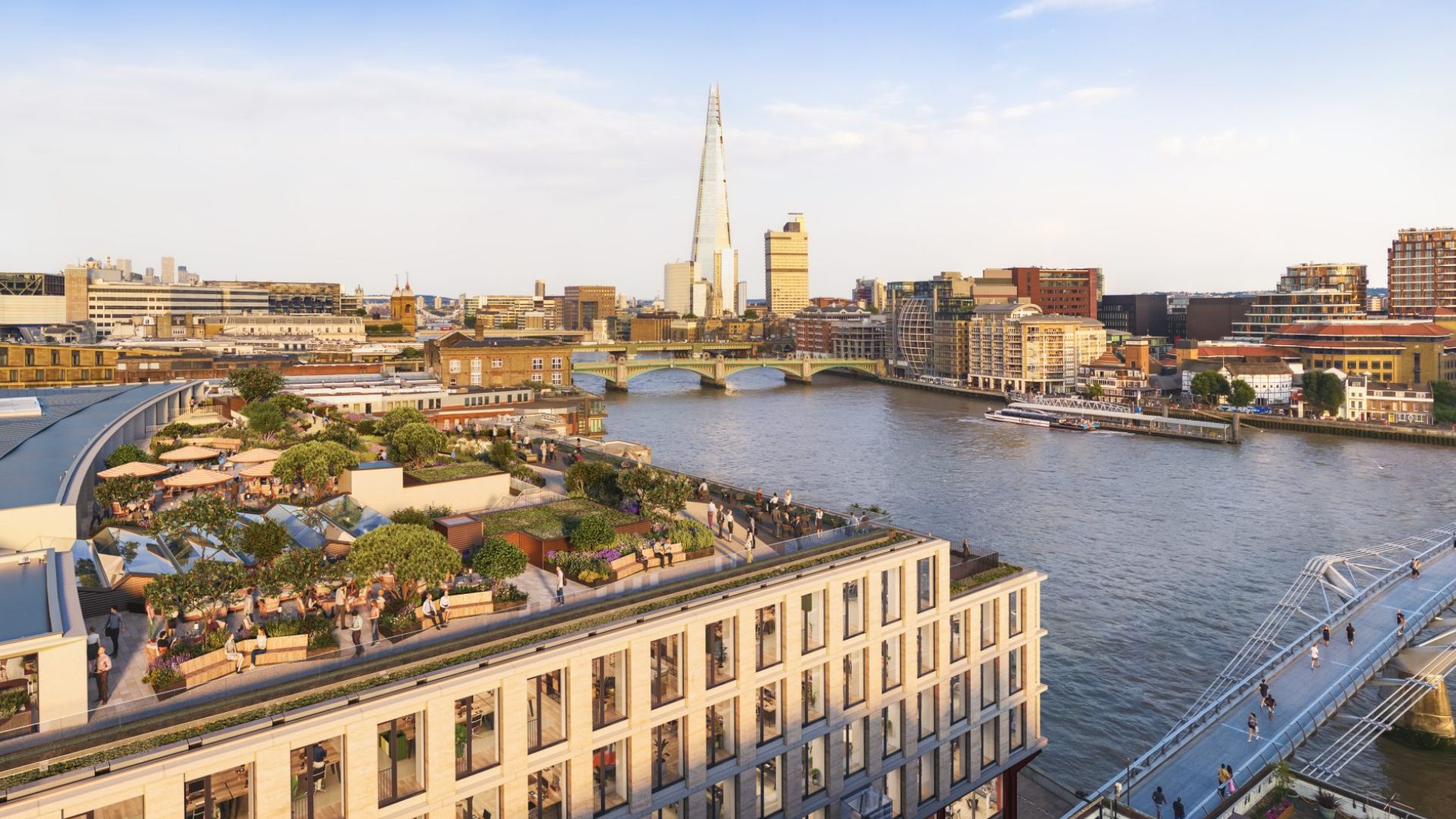
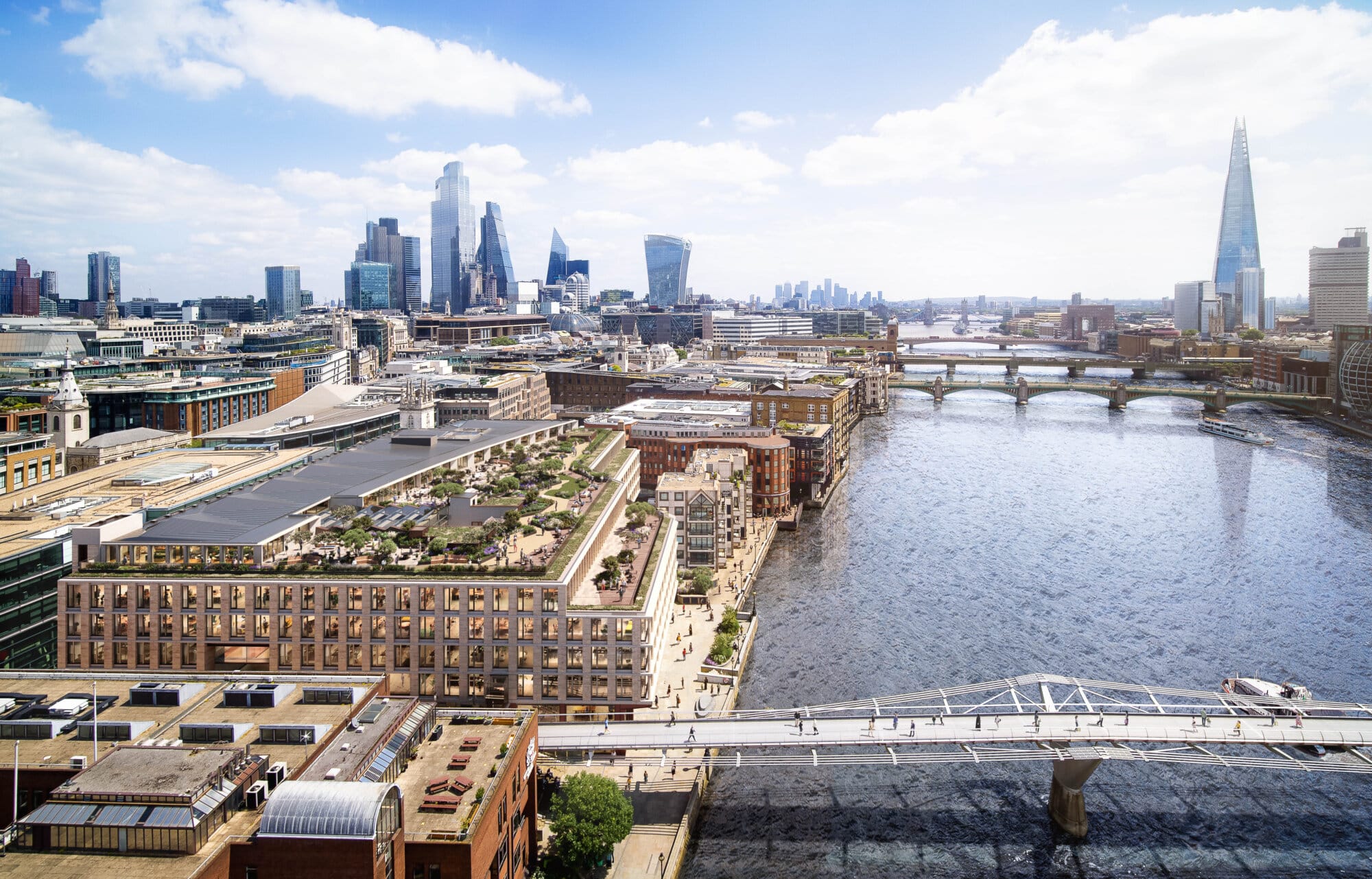
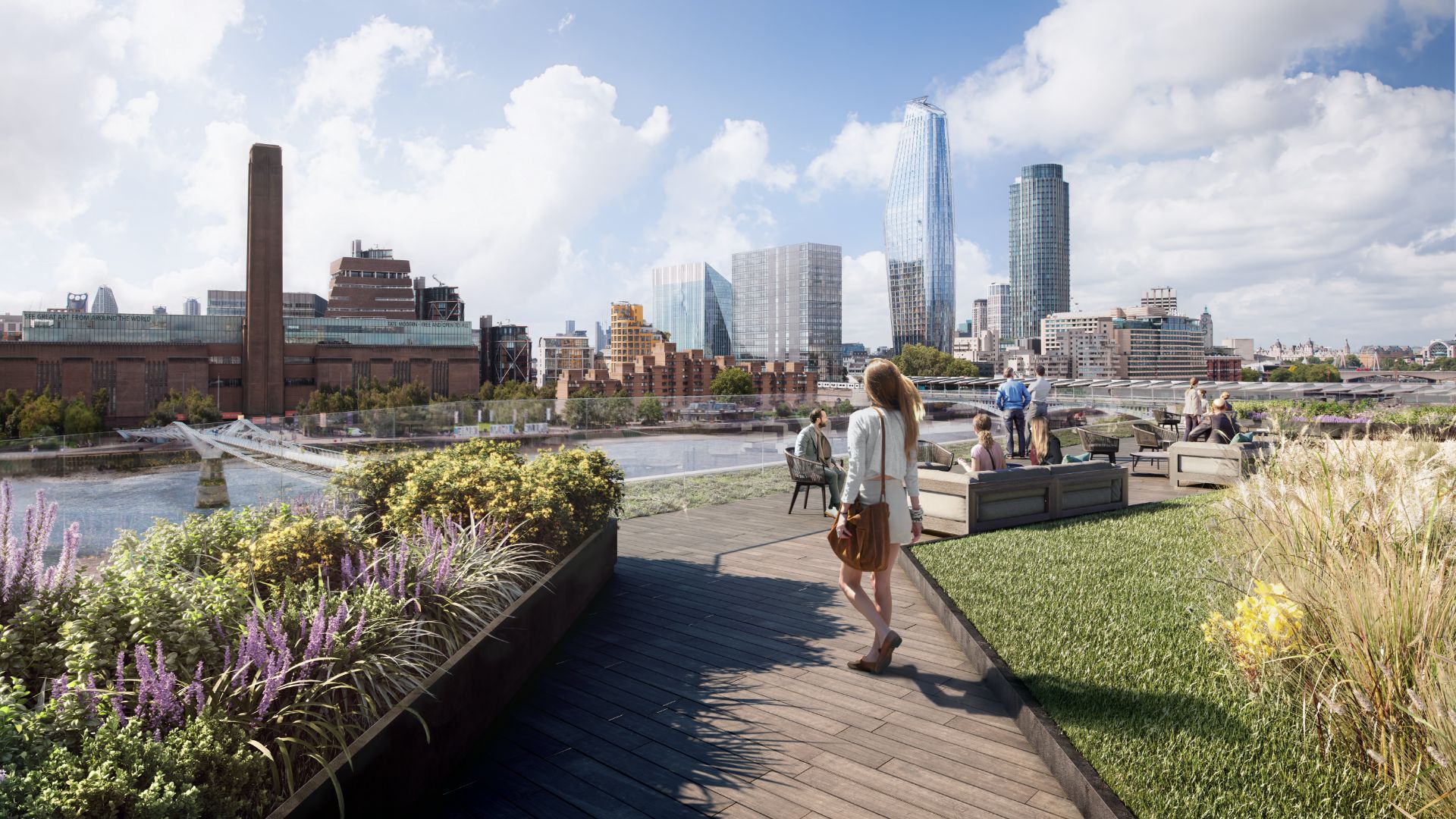
Nestled on the north bank of the River Thames between St Paul’s Cathedral and Tate Modern, One Millennium Bridge is a major redevelopment that sets a new benchmark for sustainable commercial architecture. The project retains the structural shell of the original 1988 Richard Seifert building, significantly reducing embodied carbon while allowing for a contemporary transformation. Spanning the full footprint of the building, the roof terraces together form one of the largest rooftop landscapes in London.
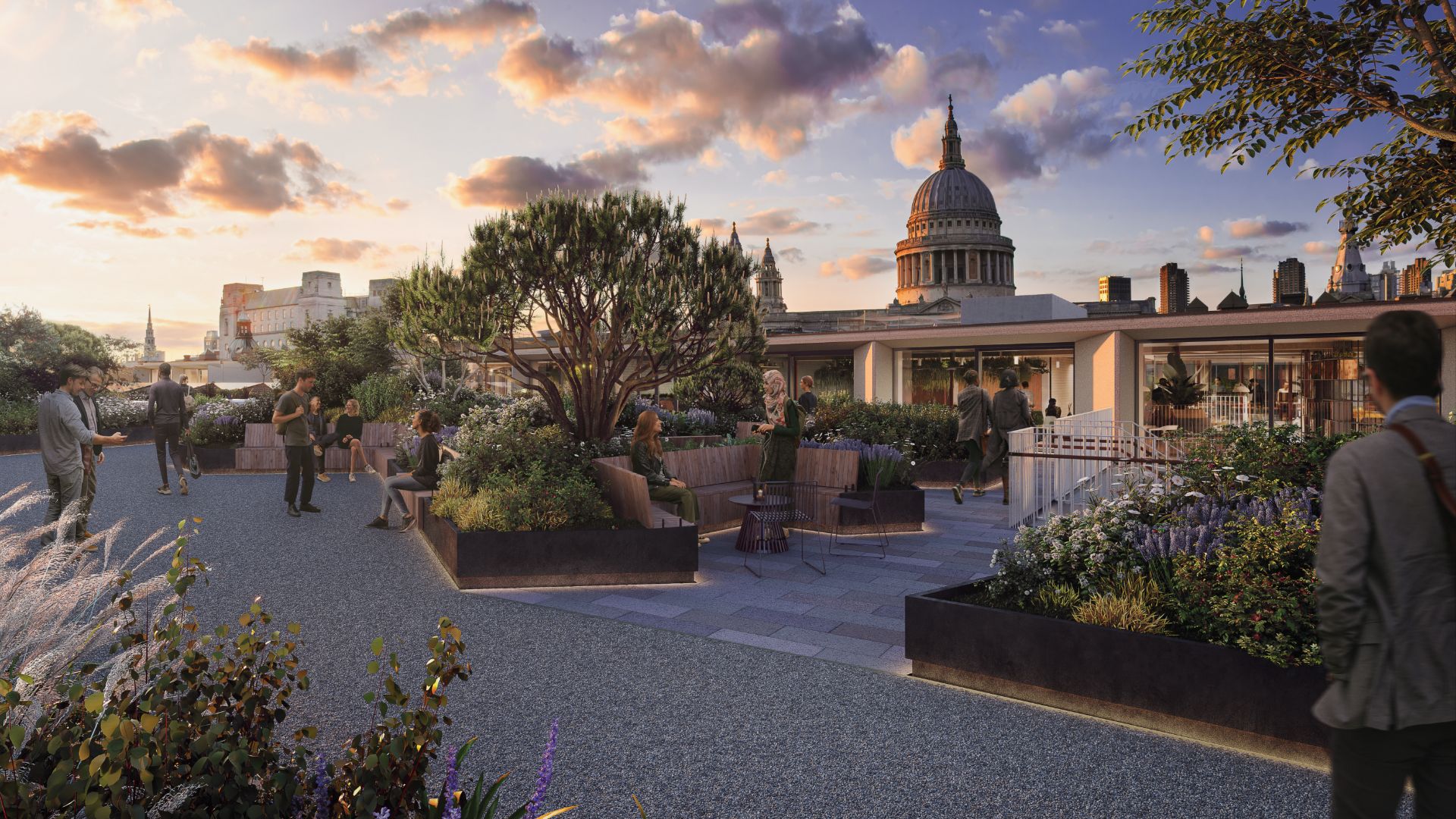
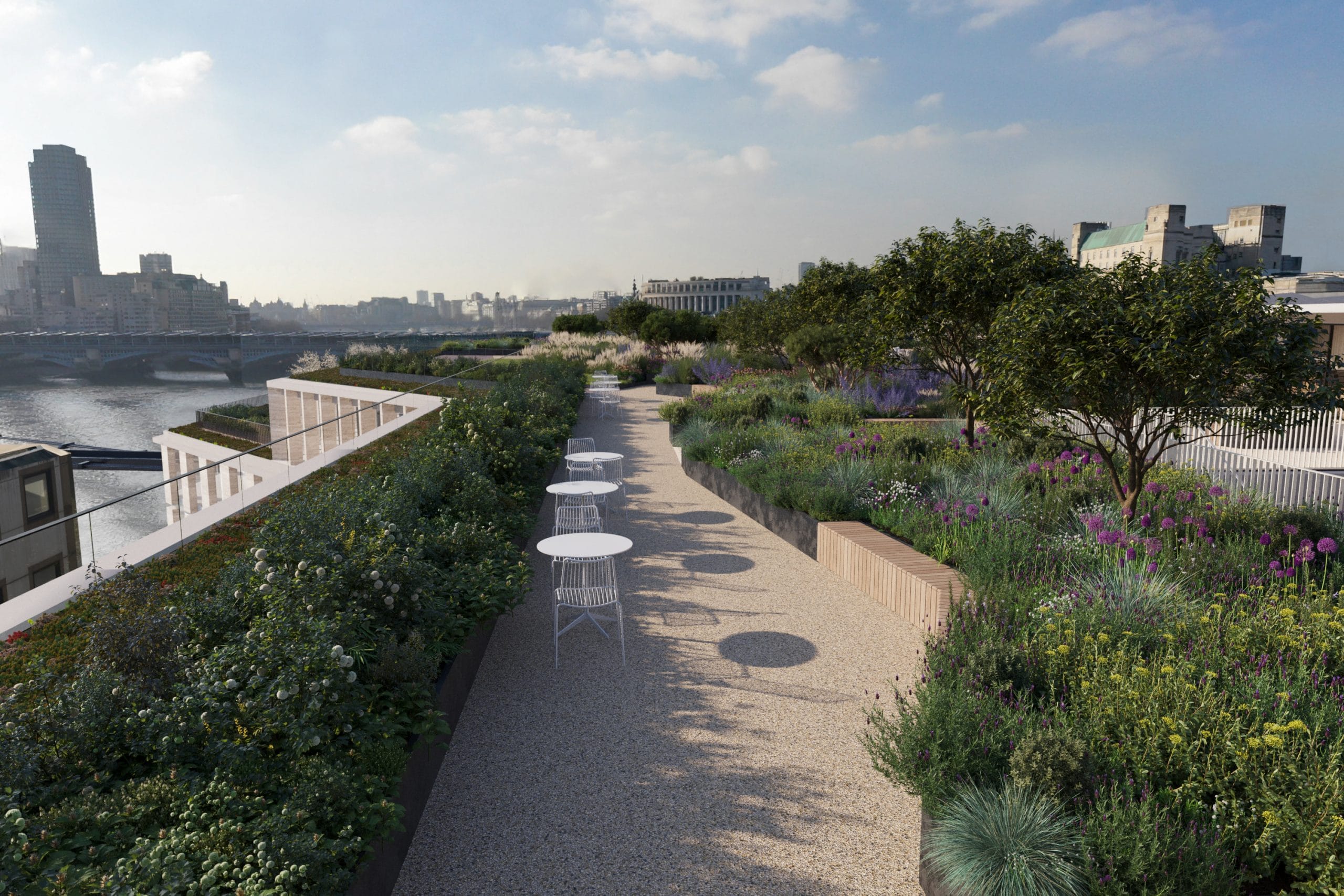
We have created a generous and ecologically responsive rooftop environment that promotes biodiversity, attenuates rainwater, and helps mitigate the urban heat island effect. The 2,527 sqm roofscape includes a publicly accessible terrace overlooking Tate Modern, a 570 sqm restaurant terrace designed to maximise urban greening, and additional amenity spaces offering spectacular views across the River Thames and north towards St Paul’s Cathedral.
Arranged across two levels, the terraces accommodate a range of uses. The lower level comprises a private terrace for building occupants alongside areas of extensive green roof. The upper level is divided into two principal zones: a publicly accessible eastern terrace incorporating the restaurant and viewing areas, and a more private western terrace serving the office spaces. Together, these landscapes provide valuable settings for outdoor working, informal meetings, and moments of respite, supporting both mental and physical wellbeing.
Planting throughout the terraces is ecologically rich, combining native and non-native species to enhance urban biodiversity and create a resilient rooftop habitat. Integrated blue roof systems play a key role in water management, capturing rainwater and enabling passive irrigation through the planters, significantly reducing overall water demand. The result is a high-performing roofscape that seamlessly integrates environmental function with a refined, human-centred landscape experience.